
What to Expect at an Appraisal Site Visit: A Prep Checklist
People picture one generic appraisal visit — an appraiser walks through, takes some photos, and leaves. In reality, the scope of a site visit varies significantly depending on the loan program, the intended use of the appraisal, and the property type. Here’s what actually happens, what’s required of you, and why FHA and VA visits in particular go further than most people expect.
Why the site visit matters
USPAP (the Uniform Standards of Professional Appraisal Practice) and Alaska statutes require an appraiser to verify and document the property characteristics that actually affect value — not just note them from a listing description. That typically means confirming site size and boundaries, the condition of improvements against their original quality, interior and exterior dimensions, rentable area or gross building area, the condition of heating and utility systems, and the overall layout and utility of the property. Most clients also need photos and written descriptions included in the final report, which is only possible with direct observation.
Site visit scope isn’t one-size-fits-all
The required scope can range from minimal — reviewing satellite imagery and historical online data — up to a full interior and exterior walkthrough that includes mechanical rooms, crawl spaces, attics, storage areas, sheds, and accessible land. Typical minimum requirements fall in between: an exterior view of all improvements, interior access to common or public spaces and mechanical rooms, and access to any area showing signs of needed repair or renovation.
Commercial properties often require interior access to each unit type for spot measurements to verify dimensions. Litigation or other high-stakes assignments may require complete access to every space on the property. A qualified appraiser will communicate the required scope in advance so you know what to prepare for — this shouldn’t be a surprise on the day of the visit.
Why FHA and VA visits go further than a standard appraisal
Not every appraisal is checking the same thing. A conventional loan or cash-purchase appraisal is generally focused on market value alone. FHA and VA appraisals do that too, but they layer on an additional job: confirming the property meets a minimum livability and safety standard, on top of the value opinion.
FHA appraisals follow HUD Handbook 4000.1, which sets Minimum Property Standards (MPS) covering structural soundness, functioning roof, electrical, plumbing, and heating systems, safe egress, peeling paint remediation on homes built before 1978, adequate water and septic systems, and pest issues. It’s worth knowing that an FHA appraisal is not the same thing as a home inspection — the appraiser is checking baseline safety and livability, not every mechanical system in depth, which is why a separate inspection is still worth getting even on an FHA purchase.
VA appraisals follow VA Pamphlet 26-7, Chapter 12, which sets Minimum Property Requirements (MPRs) built around the standard of “safe, structurally sound, and sanitary.” Notable specifics include a minimum 50°F temperature requirement in any room with plumbing, adequate water and sewage systems, pre-1978 lead paint remediation, and termite inspections in VA-designated risk areas. A few of these rules changed as of May 1, 2026 — post-1978 peeling paint is no longer an automatic repair condition, and non-vented fireplace certification requirements were loosened — so if you’re reading older guidance online about FHA or VA requirements, double-check the date on it.
On the opposite end of the spectrum, some conventional or cash transactions don’t require full interior access at all — certain exterior-only or desktop appraisal products exist for specific, limited circumstances. The point is: don’t assume your appraisal will look like your neighbor’s, or like what you read on a generic national blog. Ask what your specific assignment requires.
What you’re responsible for before the visit
Based on our own site visit policy, client preparation genuinely affects how smoothly (and how quickly) the visit goes:
- Clear all walkways, doorways, and access paths of snow, ice, or slip hazards. This is a serious point for us — safety is the top priority on every visit, and Alaska winters make this a real, recurring issue rather than a boilerplate reminder.
- Disclose any known hazards in advance — broken boards, weak flooring, holes, structural issues — so they can be planned for rather than discovered on-site.
- Remove or move personal property that blocks access to any area that needs to be viewed.
- Have a knowledgeable property representative present to answer questions and provide access to every space. If that’s not possible for your situation, disclose it before the engagement contract is signed so the appraiser can plan around it.
- Disclose remote or unusual access needs up front — properties reachable only by aircraft, off-road vehicle, or boat require additional planning and cost that’s best identified before the contract, not the morning of the visit.
Failing to prepare the site or disclose a hazard can lead to cancellation, rescheduling, or delays beyond the contracted delivery date, and rescheduling can carry its own fees. It’s a lot easier to spend twenty minutes clearing a walkway than to absorb a rescheduling fee.
What happens during the visit
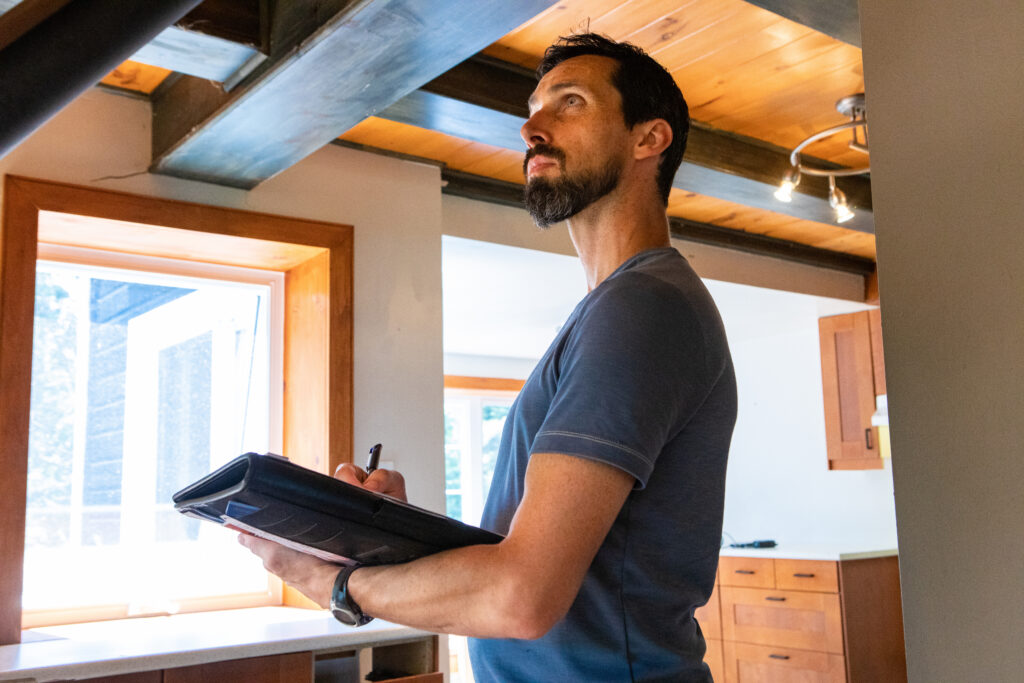
The appraiser will walk the exterior and interior, take photographs, record measurements, and note the condition of the property and its systems. Expect questions about recent updates, repairs, or known issues — this is your chance to point out anything that might not be obvious, like a recent roof replacement or an upgraded heating system. A typical on-site inspection takes 30 to 90 minutes depending on the size and complexity of the property.
One misconception worth clearing up directly: homeowners, and sellers in particular, are frequently told they aren’t allowed to be present for the appraisal inspection. That’s not accurate. Buyers and sellers are both welcome to attend if they’d like — we’re glad to have either or both there. What we won’t do is act as a go-between or a negotiator between the two parties; if you want dedicated consulting time to talk through value questions or negotiation strategy, that’s available, but as a separate paid service, not something folded into a standard site visit.
What we do require, almost without exception, is a responsible party present who can actually answer questions and provide access — unlock doors, open outbuildings, get us into every space that needs to be viewed. In practice, that’s often a real estate agent representing the property. Ironically, the more common problem isn’t an owner being turned away — it’s an agent scheduling the visit and then simply not showing up. If that happens and no one else is there to provide access, we may have to cancel or reschedule the visit, and a cancellation fee can apply. It’s a genuinely avoidable problem: confirm who’s actually going to be on-site before the appointment is locked in, not after.
After the visit
Once the site visit is complete, the appraiser puts the report together — our standard completion time is 4 to 5 weeks from the date of the visit, with faster turnarounds available as a rush service and longer timelines available for particularly complex assignments. If a question comes up once the report is delivered, or if you believe something in the report is inaccurate, you can provide additional information or request that the appraiser verify the specific item in question.
Quick checklist
- Confirm the required scope with your appraiser before the visit — don’t assume
- Clear walkways, steps, and entrances of snow and ice
- Disclose known hazards or difficult access in advance
- Clear a path to every area that needs to be viewed
- Gather documentation on recent improvements, permits, or repairs
- Confirm exactly who will be on-site to provide access — and confirm they’ll actually show up
- Know that you’re welcome to attend as buyer or seller, but the visit isn’t a negotiation session
- Ask what happens next, and when to expect the completed report